Quarter 4: New Testament
Wednesdays, 6:30–8:00PM, from Jan 7 – Apr 1

Welcome to Step Into Scripture 2025! We are excited to be offering a virtual platform for this semester of Wednesday Night Bible Study!
Give to EkklesiaIf you have any trouble viewing please try refreshing your web browser and/or press play, more viewing tips can be found following the schedule below.
Viewing Tips
- Participate using a Chrome browser if possible; avoid Safari.
- If you do not see "We are live!" at the session start time, try refreshing your browser.
- On mobile devices, you may need to manually tap the screen to unmute the sound.
- If your video freezes, click the gear icon in the video window and select a lower quality resolution.
Please note all times in the schedule are in Eastern Daylight Time.
Bible Study will happen every Wednesday night at 6:30 PM from April 30 to July 30, 2025.Weekly Gathering Structure
Our Wednesday night gatherings will last about an hour and a half, from 6:30 to 8:00 PM. The time will be structured in 30-minute increments:- 30 minutes for arrival, fellowship, and reading
- 30 minutes for teaching
- 30 minutes for table discussion and announcements
Reading Time
Whatever day we’re on in the reading plan when we gather, we’ll read that day’s passage aloud in the group. Anyone can volunteer to read one chapter, and another person will read that day’s entry from the Step Into Scripture book. Even if you've fallen behind, you’re encouraged to pick up where we are that day and continue.Teaching Time
Our teaching team will lead a lesson based on that week’s reading. This lesson acts as an additional devotional beyond the book, modeling that we’re never done learning the Bible. Each reading offers new insights, and the book is just one part of the journey.Table Discussion Time
During each weekly gathering, you'll be provided with a brief overview of the Wednesday lesson and discussion questions. You’ll then join a group to reflect on and respond to the lesson together.Breakout Rooms
Anita's Breakout Group
Anita has been attending Ekklesia since 2022. She has lived in South Carolina for 16 years and is originally from West Virginia. Anita has hosted small groups in a “live” setting, and is excited to be hosting this on-line group. VisitChristy's Breakout Group
Christy is a dedicated professional and life-long follower of Christ. A renowned educator helping people world-wide find financial freedom, along with providing the biblical principles of God's provision to those who follow Him. VisitKarina's Breakout Group
Karina has been at Ekklesia since 2022 and has been a Step Into Scripture table host since 2023. This year of SIS, she's led an online group, co-hosted last quarter with Nancy, and is looking forward to leading a new group and building our cadre of online hosts. VisitNancy's Breakout Group
Nancy Muriel, a member of Renaissance COC, is excited to continue building connections both near and far through this Bible study group. She looks forward to growing in faith while strengthening relationships within the community and beyond. VisitTina's Breakout Group
Ekklesia Resources
Quarter 1
Week 1
Week 2
Week 3
Week 4
Week 5
Week 6
Week 7
Week 8
Week 9
Week 10
Week 11
Week 12
Week 13
Week 14
Quarter 2
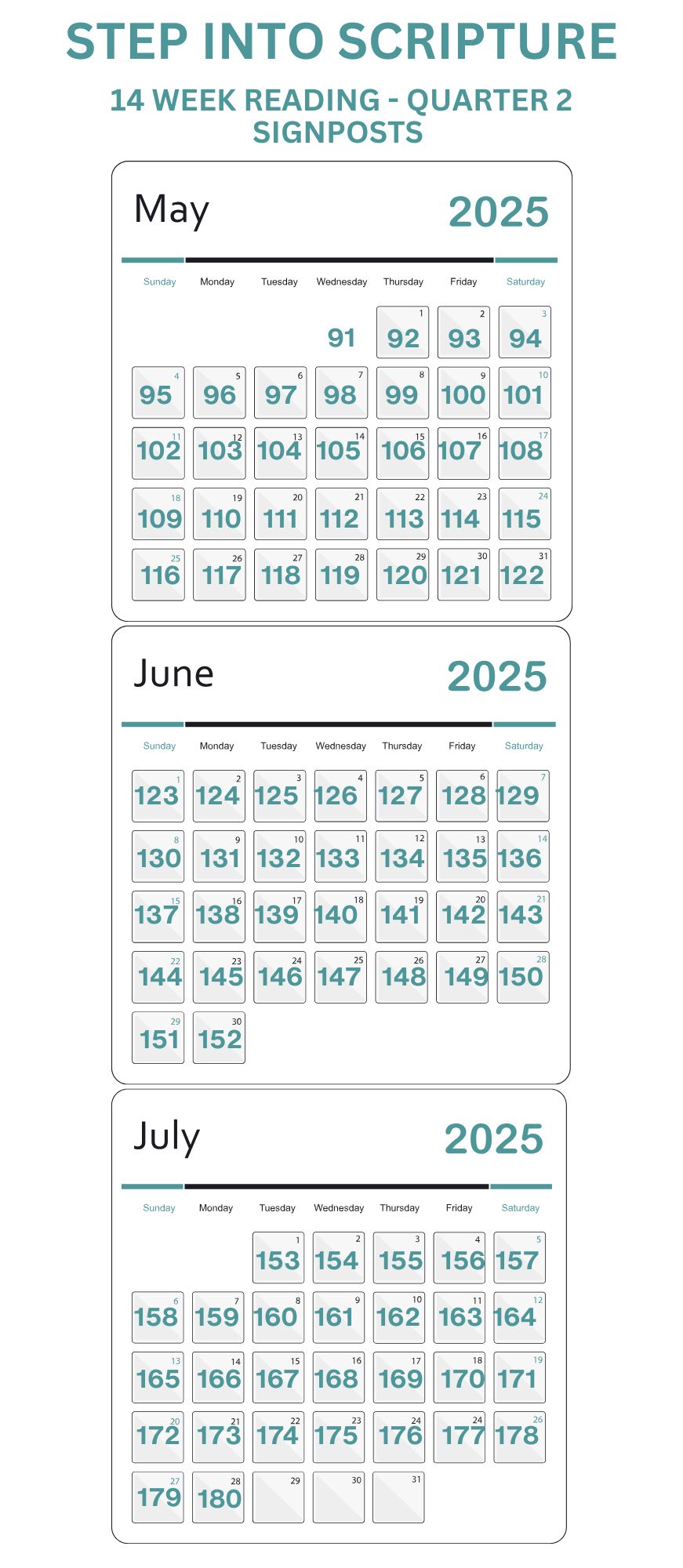
Week 1
Week 2
Week 3
Week 4
Week 5
Week 6
Week 7
Week 8
Week 9 - No meeting this week
No resources this week.
Week 10
Week 11
Week 12
Week 13
Week 14
Slide Deck Discussion Questions Study Notes Teaching Video
Quarter 3
Week 1
Week 2
Week 3
Week 4
Week 5
Week 6
Week 7
Week 8
Week 9
Week 10
Week 11
Week 12
Week 13
Week 14
Quarter 4
Week 1
Week 2
Week 3
Week 4
Week 5
Week 6
Week 7
Slide Deck Notes Discussion Guide Teaching Video
Week 8

Ekklesia App
If you have not already done so, please download the Ekklesia App.Table Host Discussion Guide
Week 8: No Second Class Citizens
This week’s teaching presses the gospel forward into one of the most disruptive realities in Acts: there is real equality in Christ and in His kingdom. The early church had to confront deep cultural walls, first through the inclusion of the Ethiopian eunuch (Acts 8), then through Cornelius and the Gentile household receiving the Holy Spirit (Acts 10–11), and even through Peter’s later hypocrisy that Paul confronted (Galatians 2). Along the way, we see how God patiently dismantles prejudice, sometimes even meeting His people in their blind spots. God does not show favoritism, and the church must not either. We are reminded that the kingdom isn’t theoretical: it forms a new people, confronts favoritism as sin, and calls us to repentance and justice. As we reflect on real injustice even in recent history, it is our responsibility to live “on earth as it is in heaven.”
Discussion Questions
What does it mean to say “the kingdom of God has no second-class citizens”?
- Answer: In Acts, God repeatedly proves that belonging is not based on ethnicity, status, or cultural “insider” markers, but on Christ and the gospel. The Ethiopian eunuch is welcomed (Acts 8), Gentiles are fully received (Acts 10–11), and Peter declares, “God does not show favoritism” (Acts 10:34–35). Paul later emphasizes unity in Christ (Galatians 3:26–29).
- Application: Where do you feel tempted to rank people—who is “safe,” “like us,” “more spiritual,” or “less than”? What would repentance look like in a specific relationship, habit, or attitude this week?
Why was the Ethiopian eunuch’s inclusion such a big “kingdom announcement”?
- Answer: The eunuch had been worshiping and reading Scripture (Acts 8:27–28), yet Deuteronomy 23:1 describes restrictions that could push someone like him to the margins. Acts shows the new covenant doing what the old covenant couldn’t fully accomplish: an “excluded” person is brought in. Isaiah even anticipated this kind of mercy and inclusion (Isaiah 56:3–5).
- Application: Who tends to get pushed to the margins in our world—socially, economically, racially, relationally? How might Jesus be calling you to step toward them the way He did toward outsiders?
In Acts 10, why does God give Peter a vision about animals if the point is people?
- Answer: God meets Peter where his categories are strongest: clean/unclean (Acts 10:11–15; Leviticus 20:25–26). Peter eventually learns the vision is not mainly about food; it’s about not calling people impure or unclean (Acts 10:28). God is dismantling prejudice and expanding Peter’s obedience to the Great Commission (Matthew 28:19; Mark 16:15; Luke 24:47).
- Application: Where might God be confronting you gently, starting with something you understand (a “smaller” category) to lead you into a bigger area of obedience (people you avoid, assumptions you carry, groups you dismiss)?
Why did the Spirit fall on Cornelius’ household before baptism, and what was God proving?
- Answer: In Acts 2 the pattern is repentance and baptism followed by the gift of the Spirit (Acts 2:38). In Acts 10, God flips the order (Acts 10:44–47) to make the point undeniable: Gentiles are not second-class and cannot be blocked. Peter defends this directly in Acts 11:17–18: God gave them the same gift; who was Peter to stand in the way?
- Application: What “gatekeeping” attitudes show up in church culture today, spoken or unspoken? How can you personally become the kind of believer who removes barriers and makes room for people to come all the way to Jesus?
Peter slipped again in Galatians 2. What does that teach us about favoritism and pressure?
- Answer: Even after Acts 10, Peter draws back from Gentile believers when pressure arrives (Galatians 2:11–12). Paul confronts it because it contradicts the truth of the gospel. James names favoritism as sin (James 2:8–9), and Acts 6 shows that prejudice can even show up inside “the church” through cultural-linguistic divides (Acts 6:1).
- Application: What pressures shape your behavior (family expectations, friend groups, political tribalism, fear of being misunderstood)? Where might you be “drawing back” from brothers and sisters you should be embracing?
Prayer Prompts
- Repentance & heart alignment: King Jesus, search us. Show us any prejudice, favoritism, or fear in us. Give us humility to confess it and courage to repent. (Acts 10:34–35; James 2:8–9)
- Unity that reflects heaven: Lord, make our church look like Your kingdom. Teach us to love across lines of race, culture, background, and class so we practice now what we’ll live forever. (Revelation 7:9–10)
- Justice + gospel courage: Holy Spirit, help us notice where people are overlooked, pushed aside, or excluded, and make us the kind of people who step in, protect the vulnerable, and welcome the outsider in Jesus’ name. (Acts 6:1; Acts 8; Acts 10–11)